
Round Runner Release

app-icon

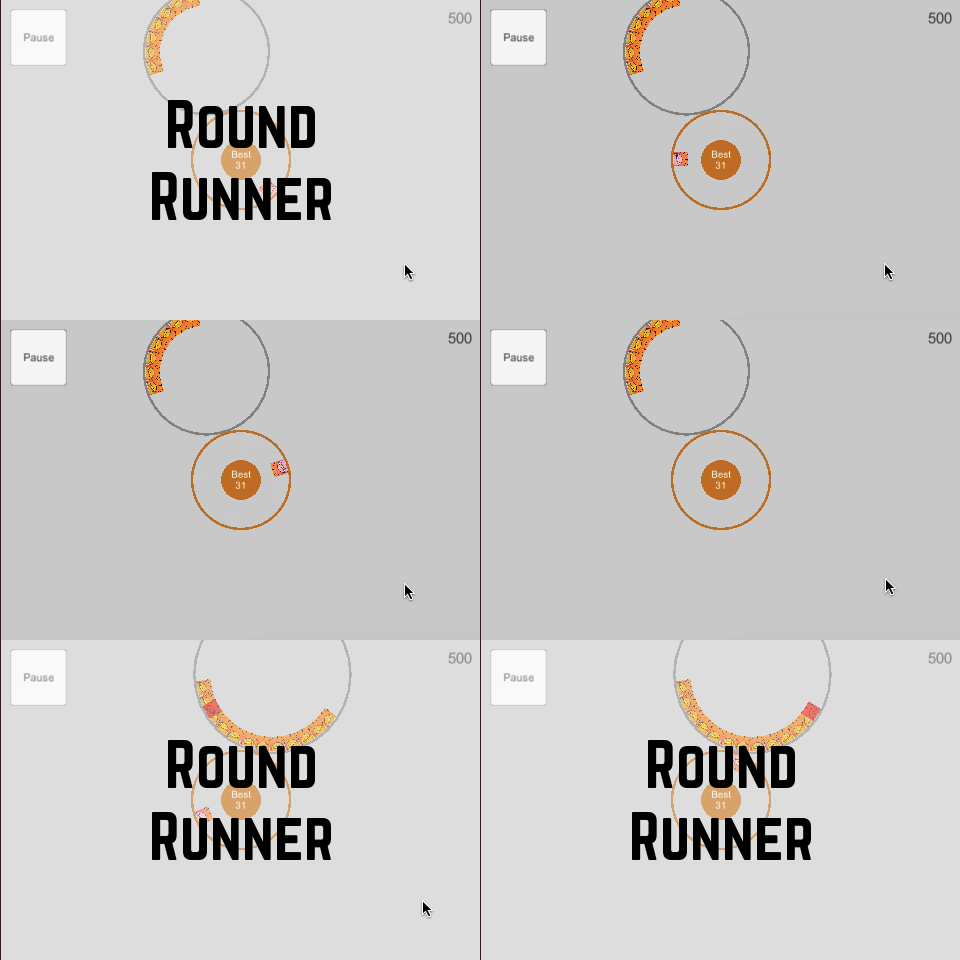
Not long after Pip Panic! was released, I worked on a little game clone called Round Runner. It’s literally a stripped-down version of Boombit’s “Running Circles” game. The game was released on the Google Play Store yesterday, and is now pending approval on the Apple App Store.

It took me a total of approximately 7 working days (spanning across 2 weeks, as I had other projects to work on too). The purpose of the project was to gauge how fast I could create a simple game with basic monetisation (Unity Ads) and ship it out to the Android/iOS stores. Turns out it wasn’t too difficult, although the quality and depth of the game is lacking.
roundrunner-18

You can download the games from the following link:

On a side note, I recently looked into Kha, a Haxe framework that is akin to C++’s SDL. It boasts of native-like performance (check out the comparison chart here!) and it exports to the native project files (e.g. Android target will be exported as an Eclipse project instead of an APK) to allow better debugging.

I can’t really explain much to do it much justice, since I just started looking into its API. From my impression, it has a long way to go, but it shows a lot of promise. I may start doing some tutorials for Kha if I manage to wrap my head around it.

As for the Visual Novel tutorial series, it is currently on hiatus because I honestly lost interest on writing it half way. It turned out a larger project than expected, and I don’t want to publish a half-done series that may never be finished.

Pip Panic! Release

Icon-76@2x

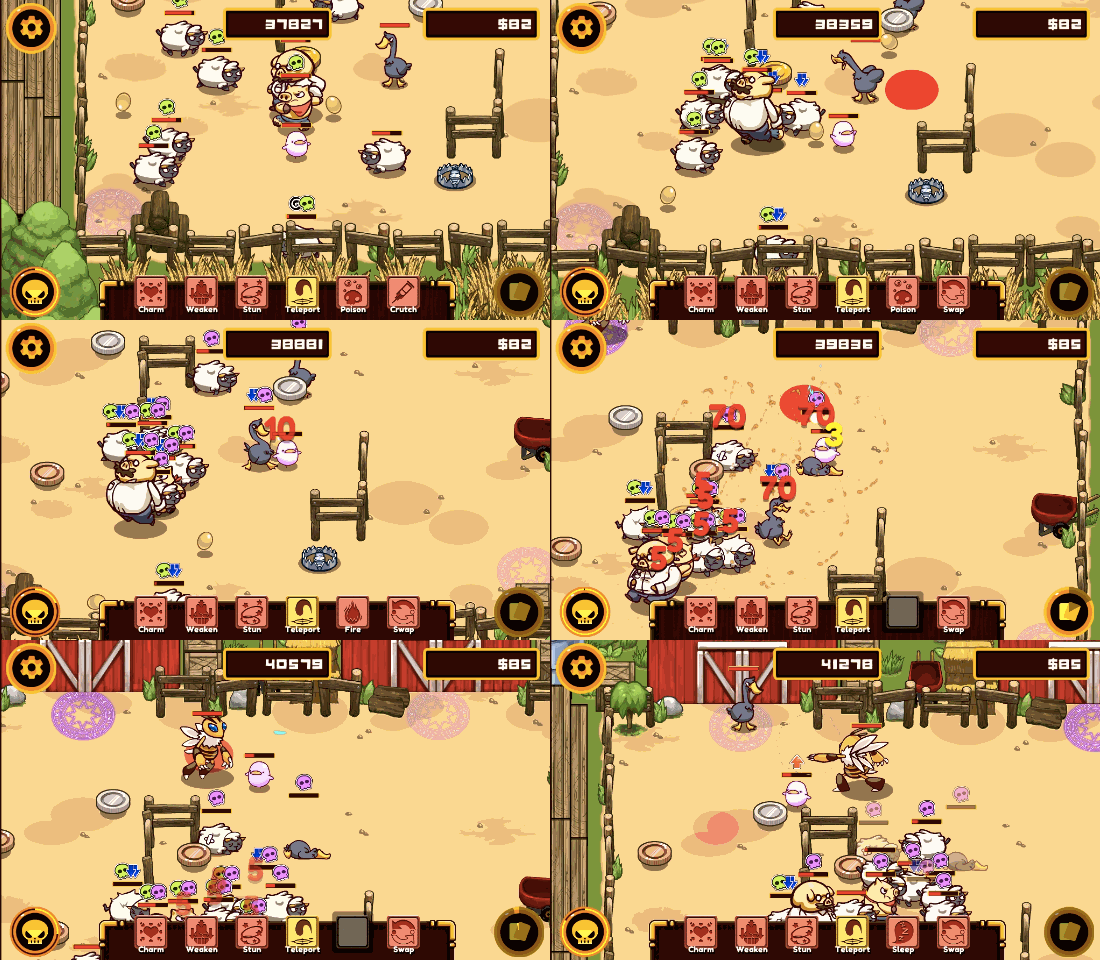
Remember I said I was going on hiatus from tutorial-writing because I had a project to finish up on? That project is Pip Panic, the first indie game I did with my partner, Monosattva.

You can download the game from these links:

This took us longer than expected. Approximately 10 months, since we conceived the idea in September 2014. But now that it’s out, we just need to clean up some loose ends (balancing, bug-fixing), and we can finally move to our second game.

You can also find a sort-of more informational page from the TIG forum post here. It has screenshots and download links to the desktop (but outdated) versions.

One might think, “why haven’t you move on to the second game while waiting for the first game to release?” My excuse was, I still had other side projects going on, and deadlines approach for all of them. On one hand, I have a comic I’m doing for a local comic competition (updates can be found on my Tapastic page and Tumblr page). On another, I have to work on making small, casual games for the web and mobile devices for a local games portal.

Anyway I’m still occupied with those side projects for now. I barely started on the Visual Novel tutorial for HaxeFlixel, but I’ll eventually get to writing it.

Here’s to the first game we released on App Store as indie developers. Cheers.

News: Pip Panic!

I have been absent for a month long. I have finally finished most of the code for the game I’ve been working for the past half year with my partner, Mok. I have posted a devblog for Pip Panic! on TIG, although a little too late, but since there’s still work to be done, I figure I’d put it there. The game is made in Unity3D, so this post marks the first Unity-related article I’ve written on this blog.

Anyway, back to HaxeFlixel:

Tim Hely‘s HaxeFlixel Mechanics is much better at demonstrating the commonly-used APIs. It’s still work-in-progress, but it’s coming along nicely. In regards to this blog’s HaxeFlixel content, I’ll start to write devblog-ish articles instead. What better way to learn than to actually try to make a game from start to finish?

My first game project with HaxeFlixel shall be a Visual Novel. Yup, you heard that right. Platformers and top-down action games have been done to death, so let’s do something that’s less heavy on the physics and math (actually, it’s just that I’m bad at physics and math).

Haxeflixel – Tweening

I was writing a tutorial on Tweening in HaxeFlixel, but after finishing it, I figured it looked more like an experiment/demo rather than tutorial. So I’m just going to leave the links I used, that should serve as enough reference material on how to Tween in HaxeFlixel. It’s not too difficult. 🙂

On a side note, Tim I Hely (SeiferTim) has created a website to showcase each HaxeFlixel mechanic. It’s open source (Github) (Website), but incomplete. Nevertheless, it’s still awesome, and it’ll be even better if everyone would spare some time to contribute 😀

Perhaps the mechanics website would serve as a better starting ground, rather than this devblog, since I write on random topics that may not be helpful for beginners.